



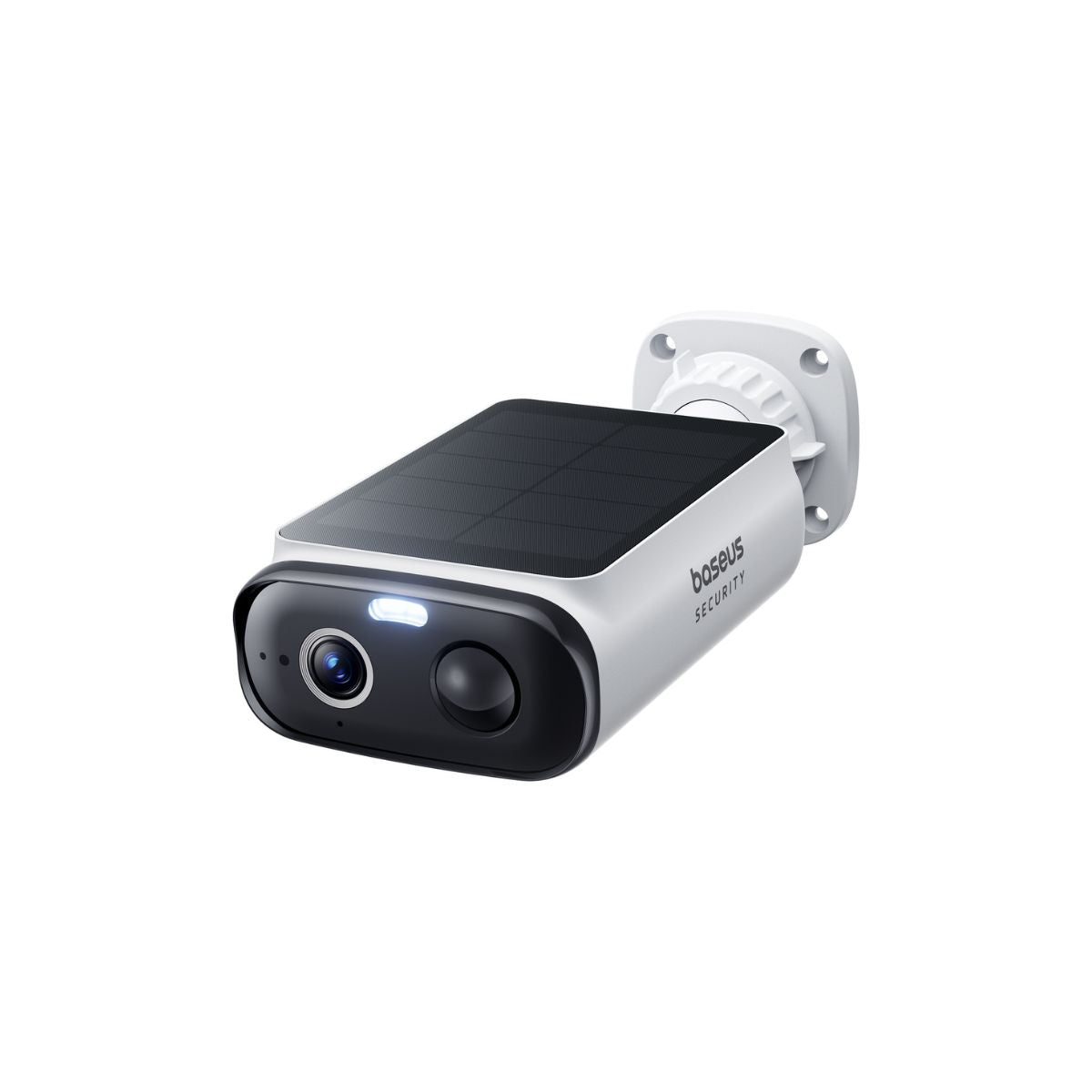
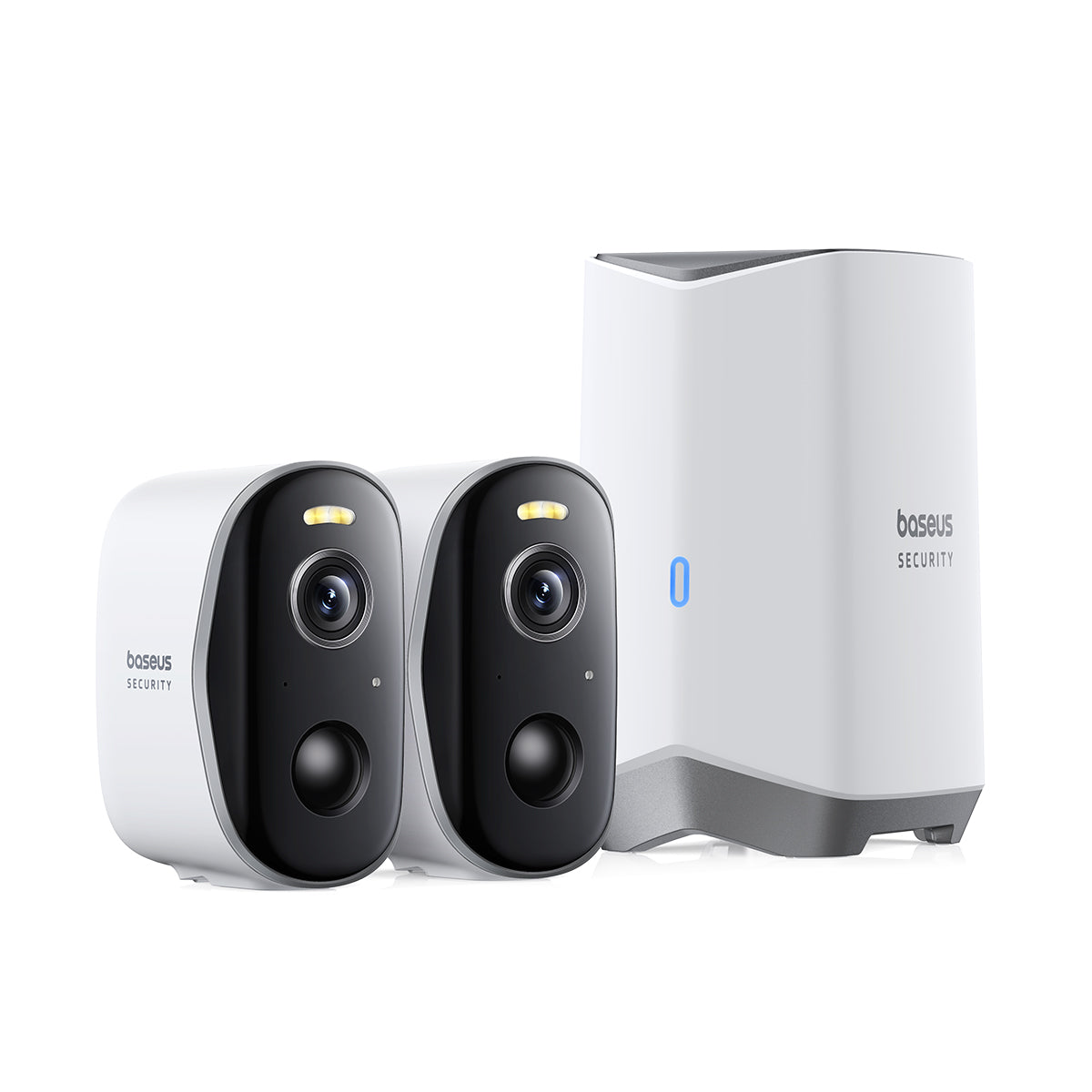

You buy a security camera to see what is happening. It sounds simple. But traditional cameras have a dirty secret. They blink.
Not literally, but functionally. A standard Pan Tilt Zoom (PTZ) camera is like a security guard with tunnel vision. When it turns left to follow a delivery truck, it is completely blind to the person walking up your driveway on the right. This is the "PTZ blind spot," and it has been the biggest flaw in home surveillance for years.
Until now.
The next generation of security is here, and it does not just look around. It looks everywhere at once. By combining a dual lens security camera architecture with the clarity of a 3K security camera, you can finally achieve a truly flawless view. It is time to stop compromising between seeing the details and seeing the whole picture.
The "Cyclops" Problem: PTZ vs Dual Lens
To understand the solution, we have to look at the problem. A traditional PTZ camera is a marvel of mechanics. It can spin 360 degrees and zoom in to read a license plate. But it has a major weakness. It only has one eye.
Think of it as looking through a straw. You can see great detail wherever you point the straw, but you lose all context of what is happening around you. In the PTZ vs dual lens debate, this is the critical differentiator.
If a single lens PTZ camera zooms in to track a squirrel, a burglar could walk right past it on the other side of the frame, and the camera would never record them. It effectively creates its own security camera blind spots every time it moves.
A Dual-lens security camera solves this by mimicking human biology. It uses two separate eyes to do two separate jobs, like in the case of the Baseus X1 Pro is to combine forces for one massive, unified view
How Does Dual Tracking Work?
Many dual-lens cameras on the market rely on a "Fixed + PTZ" setup. One lens stays still, and the other moves. While better than a single lens, this still has limitations. The fixed lens can never look away from its assigned spot.
The Baseus X1 Pro takes a smarter approach. It features two rotatable lenses.
There is no "fixed" lens here. Both eyes can move independently or in sync. This gives you unprecedented control over your field of view. You are not locked into a static perspective. You can adjust both lenses via the app to cover the exact angles your property requires, ensuring that no corner is left unmonitored.
This flexibility is the foundation of the X1 Pro's standout feature: the panoramic stitch.
Why 3K? The Sweet Spot of Security Resolution
We live in a world of 4K TVs and 8K monitors. So why are we talking about a 3K security camera? Is that not a downgrade?
Absolutely not. In the world of security, 3K is the new gold standard.
4K cameras are incredible, but they are heavy. They generate massive video files that eat up your SD card storage in days. They require huge amounts of Wi Fi bandwidth, which can slow down your entire home network and cause laggy live streams.
On the other hand, the old standard of 1080p (2MP) is often too blurry to identify a face from a distance.
3K resolution sits in the perfect "sweet spot."
-
Clarity: It offers significantly more pixels than 1080p. You can digitally zoom in on a playback video and still read a license plate or recognize a face.
-
Efficiency: It uses a fraction of the bandwidth of 4K. This means your live stream loads instantly, your notifications arrive faster, and your local storage lasts weeks longer.
When you put this sensor into a dual 3K security camera system, like the Baseus X1 Pro, you are getting double the clarity. Both the wide view and the zoomed view are crisp, clear, and usable as evidence. You can learn more about the technical nuances of camera resolution in this guide from Tom's Guide.
Real World Scenarios: Where This Tech Shines
It is easy to get lost in the specs. Let's look at how this actually changes your daily security.
The Driveway Defense
You have a package delivered. A standard camera might watch the truck. A Dual 3K security camera does both. One lens watches the truck to ensure the driver does not back into your mailbox. Simultaneously, the other lens follows the driver all the way to your porch, ensuring they place the package gently and confirming their identity with AI Face detection.
The Backyard Guardian
It is night. A standard camera might give you a grainy grey view of the whole yard. With a dual lens security camera, one lens keeps an eye on the fence line. If a stranger hops the fence, the other lens zooms in, activates its spotlight, and tracks them across the grass in full color, ensuring you have a clear image of their clothing and features.
The Front Porch Greeter
False alarms are the enemy of security. You do not want a notification every time a car drives past. With advanced AI Face detection security camera capabilities, the system ignores the cars in the background and only alerts you when a human face approaches the door.
The Complete Package: Baseus Security X1 Pro
If you are looking for a system that embodies all these advancements, you need to check out the Baseus Security X1 Pro.
It is designed to solve the blind spot problem once and for all. By abandoning the limited view of single-lens cameras and the "fixed lens" limitations of older dual models, it offers something better: total flexibility.
With two rotatable lenses, dual 3K security camera resolution, and the power of Panoramic Stitching, it gives you a view that is as wide as it is clear. It is the perfect upgrade for anyone tired of guessing what happened just out of frame.
The days of choosing between a wide shot and a clear shot are over. The dual lens security camera has rewritten the rules.
By combining the intelligence of AI dual tracking with the visual fidelity of dual 3K security camera lenses, you gain a massive advantage. You eliminate blind spots. You reduce false alarms. You gain the ability to see the whole story and the fine details at the exact same time.
Don't settle for half a view. Upgrade your home security to a system that sees everything.
Pre-Order X1 Pro on Kickstarter
Explore Our Best Selling Security Products
FAQs
Does a Dual lens security camera use more data?
It can, but efficient systems optimize this. While the camera captures two video streams, advanced compression (like H.265) and smart resolution management (like 3K security camera technology) ensure that your Wi Fi network is not overwhelmed. It provides far more data efficiency than streaming two separate 4K cameras.
Can dual tracking work at night?
Yes. Advanced dual 3K security camera systems use infrared sensors and spotlights to track at night. When the wide lens detects motion in the dark, the lens can activate a spotlight to track the subject in full color, providing crucial details even in pitch black conditions.
Why is 3K better than 4K for home security?
While 4K has more pixels, benefits of 3K resolution include a better balance of clarity and storage. 3K provides enough detail to identify faces and license plates but generates smaller file sizes. This allows for faster loading times on your phone app and longer recording history on your SD card compared to data hungry 4K systems.


