




You have seen the movies. The security guard sits in front of a wall of monitors. He looks at screen one. Then screen two. Then screen three.
It is an outdated concept.
In the real world, you do not have a wall of monitors. You have a smartphone. You have a busy life. You cannot flip through five different camera feeds trying to figure out where the intruder went.
This is where the industry is shifting. We are moving away from multiple static cameras and toward intelligent, unified systems.
The breakthrough is called Panorama Switching.
It is not just about seeing more. It is about seeing everything, all at once, without the confusion. It relies on the seamless integration of Dual PTZ camera technology and advanced software stitching. It turns disjointed video clips into a single, fluid narrative.
Tech Deep Dive: What Is Panorama Switching?
To understand Panorama Switching, you first have to understand the flaw of the single lens.
A standard camera is a cyclops. It sees what is in front of it. If you want to see the left side of the yard, you turn the camera left. But now you are blind to the right side. This is the "tunnel vision" trap.
A Panorama stitching security camera solves this physics problem with brute force and elegant software. It uses two lenses instead of one.
But it does not just show you two square videos side by side. That would be annoying.
Instead, the onboard processor takes the video feed from the left lens and the video feed from the right lens. It looks for the overlapping edges. It matches the pixels, balances the lighting, and fuses them together.
The result is a 180 degree security camera view.
You get a single, ultra wide video stream. You can see the delivery truck at the curb and the package at your door in the same frame. Panorama Switching is the ability of the system to manage this massive field of view, allowing you to focus on specific details without losing the broader context.
The Mechanics of Cross Camera Tracking
A wide picture is great. But a smart picture is better.
This is where the magic happens. It is called cross camera tracking.
In older dual lens systems, the cameras were dumb. They just recorded. If a person walked from the left side to the right side, the camera did not care.
Modern systems use AI relay tracking. This is the brain behind the eyes.
Imagine a subject enters your property from the far left. The left lens detects them. The AI identifies the shape. It says, "This is a Human." As the person walks across the yard, they cross the stitch line. In a dumb system, the tracking might break. The focus might be lost.
With AI relay tracking, the system passes the "target" data from one lens to the other instantly. It is like a relay race. The baton is passed without dropping it. The system maintains a lock on the intruder as they move across the full 180 degree panorama. You do not see a glitch. You just see a smooth, continuous track of the event.
Why "Dual PTZ" Beats "Fixed + PTZ"
If you look at the market, you will see a lot of hybrid cameras. They have one lens that is stuck in place (Fixed) and one lens that can move (PTZ).
It feels like a good idea. But it has a ceiling.
The fixed lens is stubborn. It creates a permanent blind spot behind it. If you install the camera slightly wrong, you are stuck with a view of a brick wall that you can never change.
This is why Dual PTZ camera technology is superior.
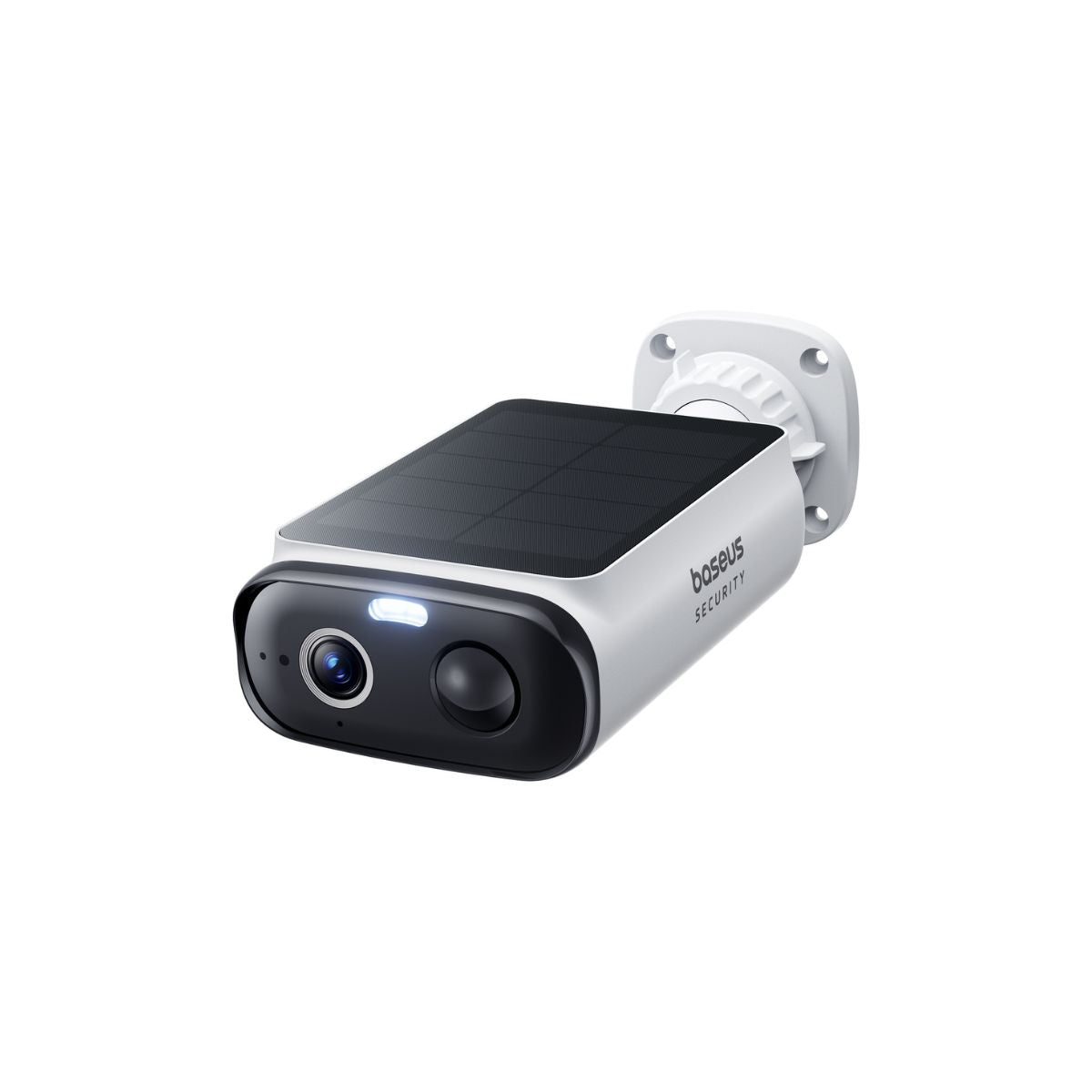
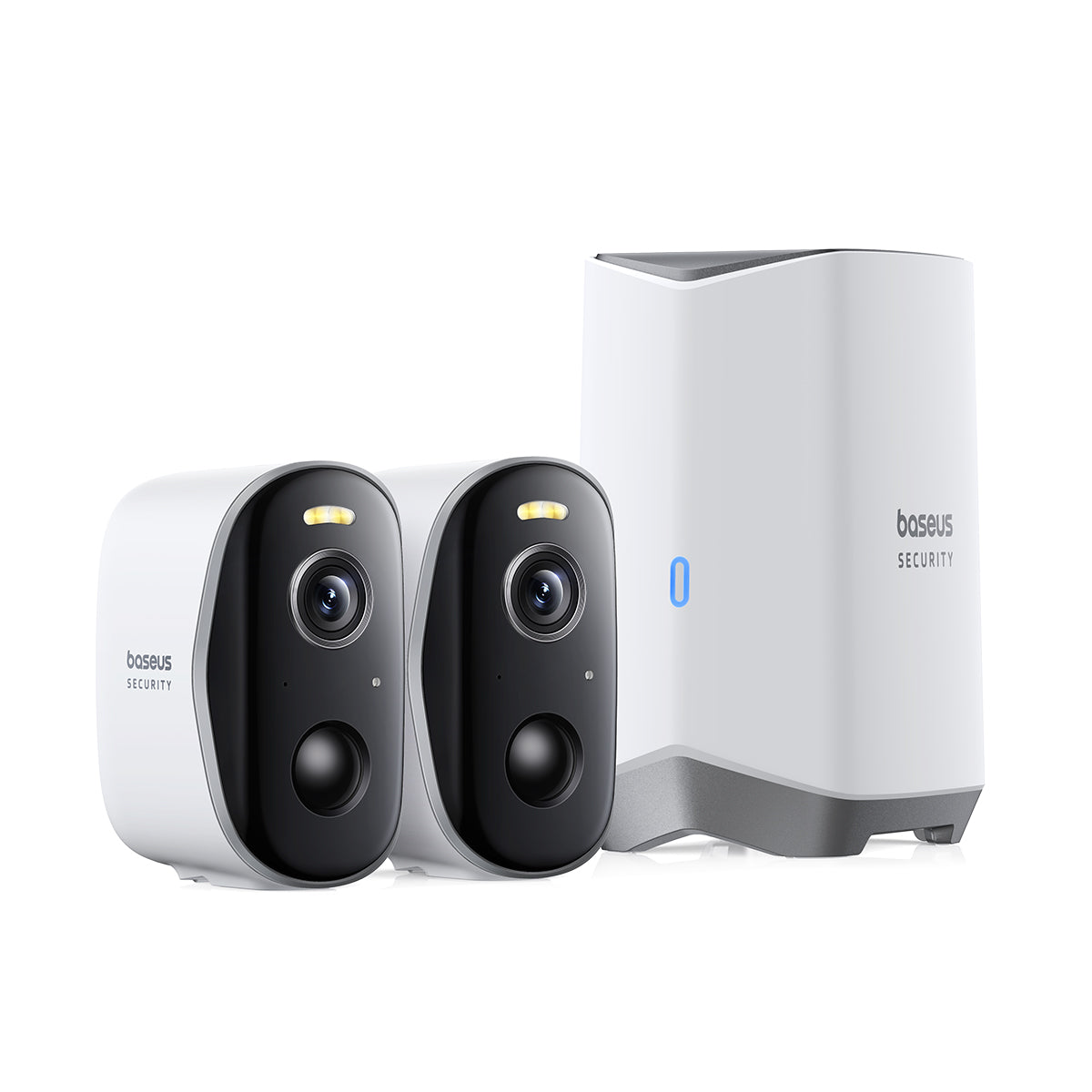
With a system like the Baseus Security X1 Pro, you are not fighting against the hardware. Both lenses are rotatable.
This offers two massive advantages over the "Fixed + PTZ" style.
-
Perfect Stitching Alignment: You can micro adjust both lenses via the app to get the absolute perfect overlap for your specific yard layout. You are not forced to accept a generic factory setting.
-
Total Freedom: You can rotate both lenses to look at completely different zones if you want, or bring them together for the ultimate panoramic view.
When comparing wide angle vs dual lens setups, the Dual PTZ wins on flexibility every time. A single wide angle lens warps the image (the fisheye effect). Dual PTZ lenses keep the image straight, sharp, and true to life.
Real World Application: One Camera, Two Roles
Let's look at how this actually works on your house. We will use the Baseus Security X1 Pro as the prime example because it pushes this tech to the limit.
Most people have a driveway and a front path.
Scenario A: The Delivery A van pulls up. The X1 Pro uses Panorama Switching to monitor the whole scene. The left lens watches the van driver. The right lens watches your porch. You see it all as one big picture. The driver drops the box. You see the face clearly. You see the license plate clearly.
Scenario B: The Intruder It is night. Someone tries to sneak around the side gate. The X1 Pro detects motion. It identifies the target as a "Human" (filtering out the neighborhood cat). The AI relay tracking kicks in. As the intruder moves from the shadows of the gate toward the back door, the camera tracks them seamlessly across the panoramic field. Because the X1 Pro utilizes a HomeStation for storage, the footage is safely recording to the hub inside your house. Even if the intruder spots the camera and tries to tamper with it, the evidence is already secure.
This is the power of a unified system. You are not just recording video. You are capturing a complete event.
Conclusion
We are done with tunnel vision.
The era of pointing a camera at a single door and hoping for the best is over. Security is about situational awareness. It is about context.
By combining Dual PTZ camera technology with intelligent Panorama Switching, you gain the upper hand. You remove the blind spots. You eliminate the fisheye distortion. You get a view that is as wide as your property and as smart as you need it to be.
Don't settle for half the picture.
Ready to see everything at once? Upgrade to the system that stitches it all together. Explore our cutting edge dual lens solutions today.
Explore Our Best Selling Security Products
FAQs
What is the difference between wide angle vs dual lens cameras?
A single wide angle lens uses curved glass to squeeze a large view into one sensor. This often causes "fisheye" distortion, where straight lines look curved and objects look far away. A Dual PTZ camera technology system uses two normal lenses and stitches the images together. This keeps lines straight and provides much higher detail across the entire view.
Does panorama stitching work at night?
Yes. High quality systems like the Baseus X1 Pro use advanced image processing to perform stitching even in low light. When the camera detects motion, it can also activate a spotlight to provide color night vision, ensuring the Panorama stitching security camera view remains crisp and colorful even in the dark.
What is AI relay tracking?
AI relay tracking is a feature where the camera's intelligence passes the focus of a subject from one lens to another. It ensures that as a person or vehicle moves across your yard, the system understands it is the same object. It allows for smooth, continuous tracking across a 180 degree security camera view without losing the target in the "seam" between lenses.


